
Grade 3 Gynecomastia Case Study on a Larger Frame
One of the most common things we hear from patients after gynecomastia surgery is that they did not realize how much the tissue was covering up. It is not just about the chest being too full or too round. The extra volume can change the look of the entire upper body, from the chest down through the midsection, in a way that hides what is actually underneath.
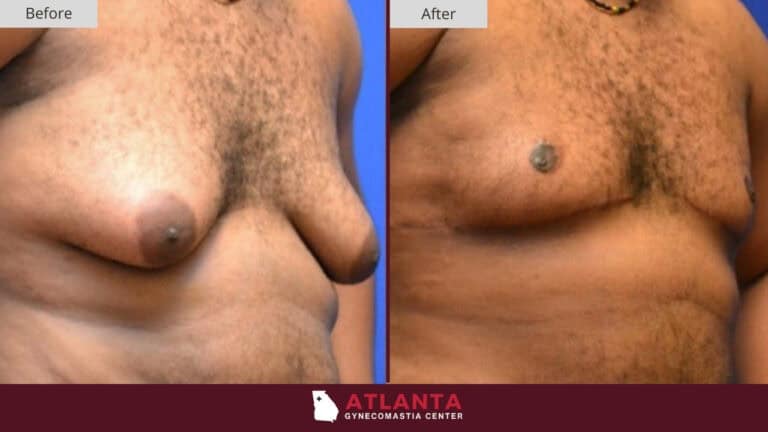
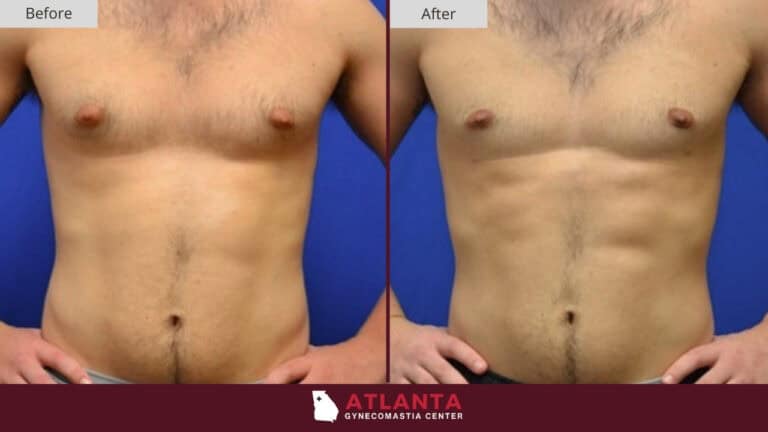
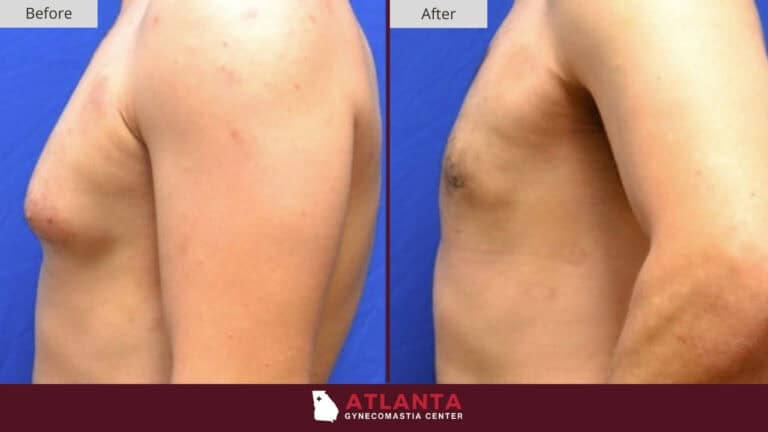
This patient is a larger-framed male with Grade 3 gynecomastia. The tissue added a layer of fullness across his chest and midsection that made his upper body look soft and undefined. After surgery, the difference is striking. The chest is tighter, the midsection looks leaner, and the muscular definition that was always there is now fully visible.
More Than Just a Chest Problem
Gynecomastia gets classified as a chest condition, but its visual impact does not stop at the pectoral line. When there is enough tissue involved, it blurs the boundary between the chest and the midsection and creates a soft, undefined look across the entire front of the torso.
That is what happened with this patient. The before photos show a chest and upper abdomen that blends together into one smooth, rounded surface. There is no visible separation between the lower chest and the top of the abs. The tissue fills in every crease and line that would normally give the upper body its shape.
From the side view, the effect is even more noticeable. The chest pushes forward and the midsection rounds outward, creating a profile that looks heavier and less defined than the patient’s actual build.

What the Before Photos Show in Detail
The front view tells the story clearly. Both sides of the chest are full and rounded with the tissue sitting heavy across the lower pectoral area. The nipples are pushed slightly outward by the volume underneath. Below the chest, the midsection is smooth and soft with no visible definition along the abdominal wall.
The three-quarter view adds even more context. The chest and belly create one continuous curve from the collarbone down to the waistline. There is no break in that curve, no angle, and no definition anywhere. For a patient who actually has muscle underneath, all of that is completely hidden.
Our Surgical Approach
Our team used a standard two-part plan for this case:
- Gland excision: The dense glandular tissue behind each areola was removed to eliminate the core of the problem. This is the tissue responsible for the firm, rounded shape of the chest that does not go away with weight loss.
- Liposuction: The surrounding fatty tissue was removed across the chest and upper torso to bring down the overall volume and reveal the shape underneath. For a larger-framed patient with Grade 3 gynecomastia, the amount of fatty tissue involved can be significant, and the lipo portion of the procedure is what creates the overall contour change.
What the After Photos Reveal
The after photos look like a different person. From the front, the soft, rounded shape across the chest is gone. The pectoral area now has a firmer, tighter look, and the lower border of the chest is clearly defined.
The continuous curve from chest to belly is gone. In its place, there is a clear break between the pectoral area and the midsection. The chest sits flatter against the body, the waistline looks narrower, and the overall proportions of the upper body are completely different.
This is not the result of weight loss or additional body contouring. This is what was hiding underneath the gynecomastia the entire time. The surgery simply removed the layer that was covering it up.

The Bigger Picture
Patients with a larger build sometimes assume that their chest just looks the way it does because of their size. They figure it is a body fat issue, not a gynecomastia issue. But there is a big difference between general chest size from body weight and the localized fullness, projection, and shape changes that come from glandular and fatty tissue buildup.
This case is a great example of that difference. The patient’s underlying build was solid all along. It just took removing the tissue on top to see it.
If your upper body does not look the way you expect it to despite your size and strength, it could be gynecomastia. Schedule a consultation at the Atlanta Gynecomastia Center to find out what is going on underneath.