
Grade 1 Gynecomastia Before and After Case Study
Grade 1 is the mildest classification of gynecomastia. The enlargement is small, there is no excess skin, and the overall size of the chest may not look dramatically different from normal at first glance. So a fair question comes up often: is it worth treating surgically?
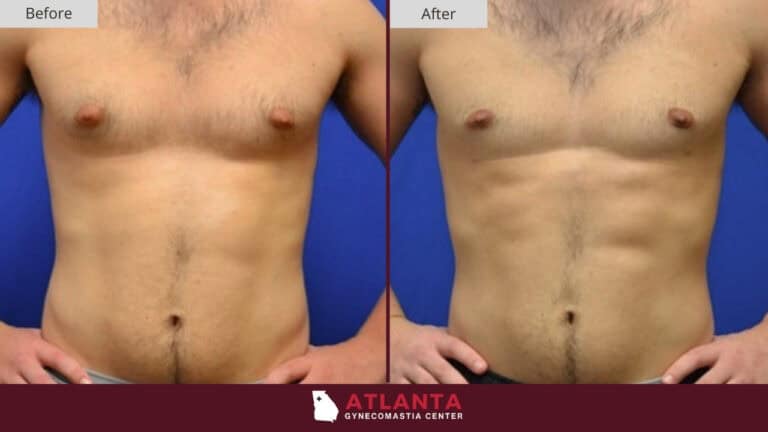
This case makes a strong argument that it is. Even at Grade 1, the gynecomastia created a soft, rounded look across the chest that did not match this patient’s average build. After surgery, the chest is noticeably tighter, flatter, and more defined. The change may be subtle on paper, but in person and in photos, the difference is clear.
What Grade 1 Actually Looks Like
Grade 1 gynecomastia is often described as “minor” or “barely there.” But mild does not mean invisible. It shows up as a soft puffiness across the chest, usually centered around the areola, that gives the pectoral area a rounded quality instead of a firm, flat one.
From the front, this patient’s chest has a smooth, pillowy shape on both sides. There is no hard pectoral edge or angular definition. The tissue blends into the surrounding area in a way that makes the whole chest look soft, even though the patient’s body type is otherwise average and proportional.
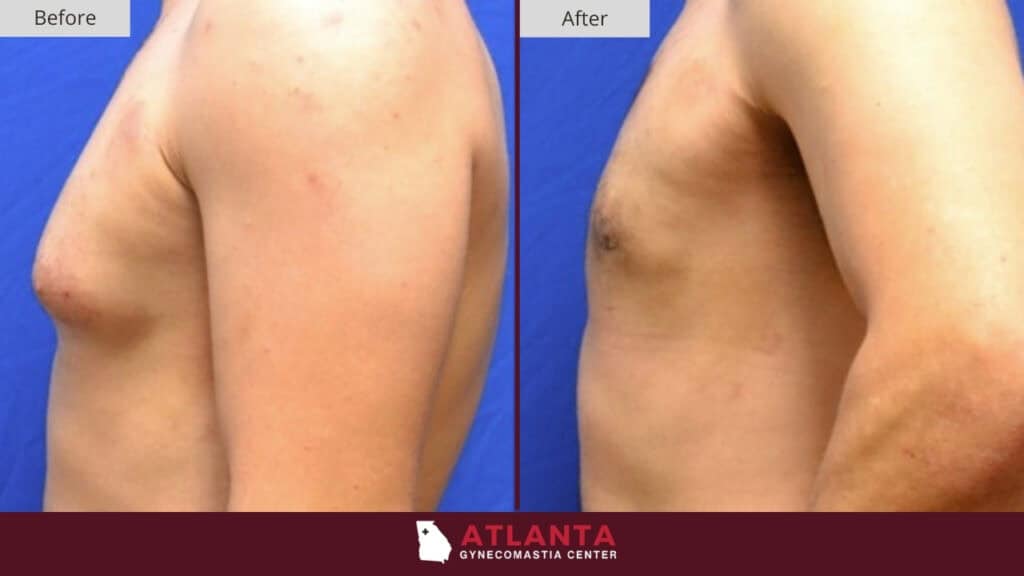
The side view adds more detail. The chest curves outward in a gentle arc rather than sitting flat against the rib cage. It is not a dramatic amount of projection, but it is enough to round out the profile and take away the flat, angular look that most men want in their chest.
Why Mild Cases Still Benefit from Surgery
The tissue behind a Grade 1 case is the same type of tissue behind a Grade 3 or Grade 4 case. It is glandular. It sits behind the areola. And it does not respond to diet, exercise, or weight loss.
The difference is just the amount of it. A Grade 1 patient has less tissue to remove, which usually means a shorter procedure, a quicker recovery, and less post-op swelling. But the core issue is the same, and the only fix is the same: the gland has to come out.
For patients who are on the fence about whether their case is “bad enough” to justify surgery, the answer really comes down to whether it bothers them. A good surgical result on a mild case can be just as meaningful as a dramatic transformation on a severe one.
How Our Team Treated This Case
Our team used the standard approach for this Grade 1 case:
- Gland excision: The glandular tissue behind each areola was removed directly. Even in a mild case, the gland is what creates the puffiness, and it has to be taken out at the source.
- Liposuction: The surrounding fatty tissue was removed to smooth out the contour and make sure the transition from the treated area to the rest of the chest looks natural and even.
For a Grade 1 patient with average build and good skin quality, this approach is straightforward. The procedure is typically shorter than higher-grade cases, and the recovery tends to be on the easier side.
Looking at the Results
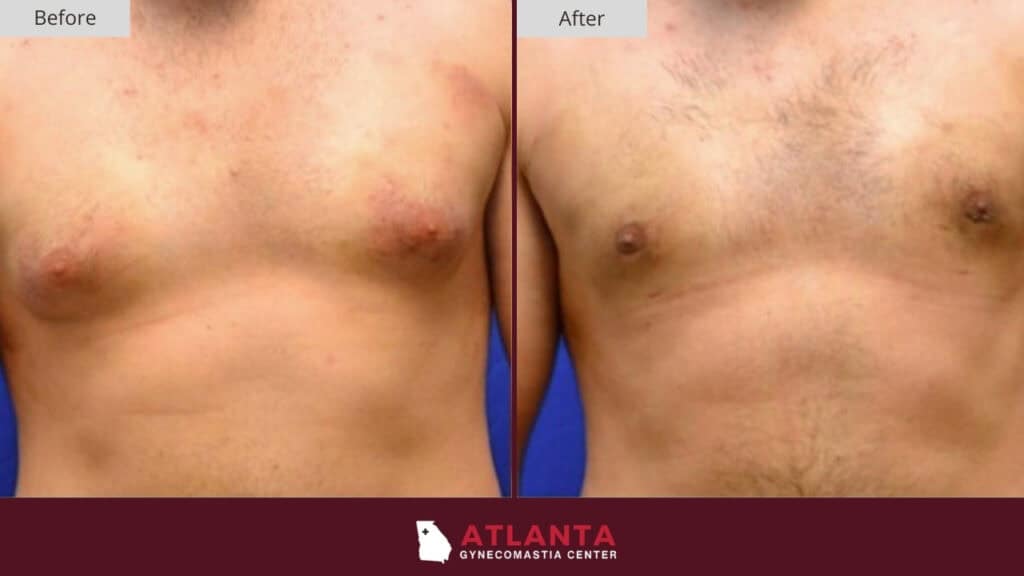
From the front, the after photo shows a tighter, more angular chest. The soft, rounded puffiness is gone and the pectoral area now has a firmer, more defined shape. The difference between the two sides is more balanced, and the overall look of the chest fits his frame much better.
The side view shows the most obvious change. The gentle outward curve from the before photo is gone. The chest now sits flat against the rib cage with a clean, straight profile from the collarbone down. That flat line is exactly what a Grade 1 correction should look like when it is done well.
The Takeaway on Mild Gynecomastia
There is no minimum grade required to qualify for gynecomastia surgery. Grade 1 cases are treated at the Atlanta Gynecomastia Center regularly, and the results are consistently strong. A smaller correction does not mean a less important one.
The goal is always the same regardless of grade: a chest that looks natural, sits flat, and matches the patient’s body type. This case is a good example of how even a mild case can look and feel very different after the gland is removed and the chest is properly contoured.
If you think your gynecomastia might be too mild to treat, schedule a consultation at the Atlanta Gynecomastia Center and let our team take a look. You might be surprised by what a small correction can do.